Owner distribution reports are the single most scrutinized document you send each month. Not the leasing report. Not the maintenance summary. The distribution statement — because it answers the only question every property owner actually cares about: how much money am I getting, and why isn’t it more?
Get the format wrong, and you’ll spend 15 hours a month fielding owner calls. Get it right, and you build the kind of trust that keeps owners from shopping your management fee every renewal cycle.
Here’s exactly what to include in your owner distribution reports, how to time them, and how to handle the months when the number is negative.
Most property owners understand gross rent. Beyond that, the knowledge drops off fast — even among sophisticated investors with 20+ doors.
Here’s what owners typically don’t understand without explanation:
The fix isn’t educating owners in a phone call. It’s building the education into the report itself. Every line item should be self-explanatory. If an owner needs to call you to understand a charge, the report failed.
Pro Tip: Add a one-line description next to every deduction on your distribution report. “Plumbing repair — Unit 4B kitchen leak, 2/15” eliminates 80% of owner questions before they happen.
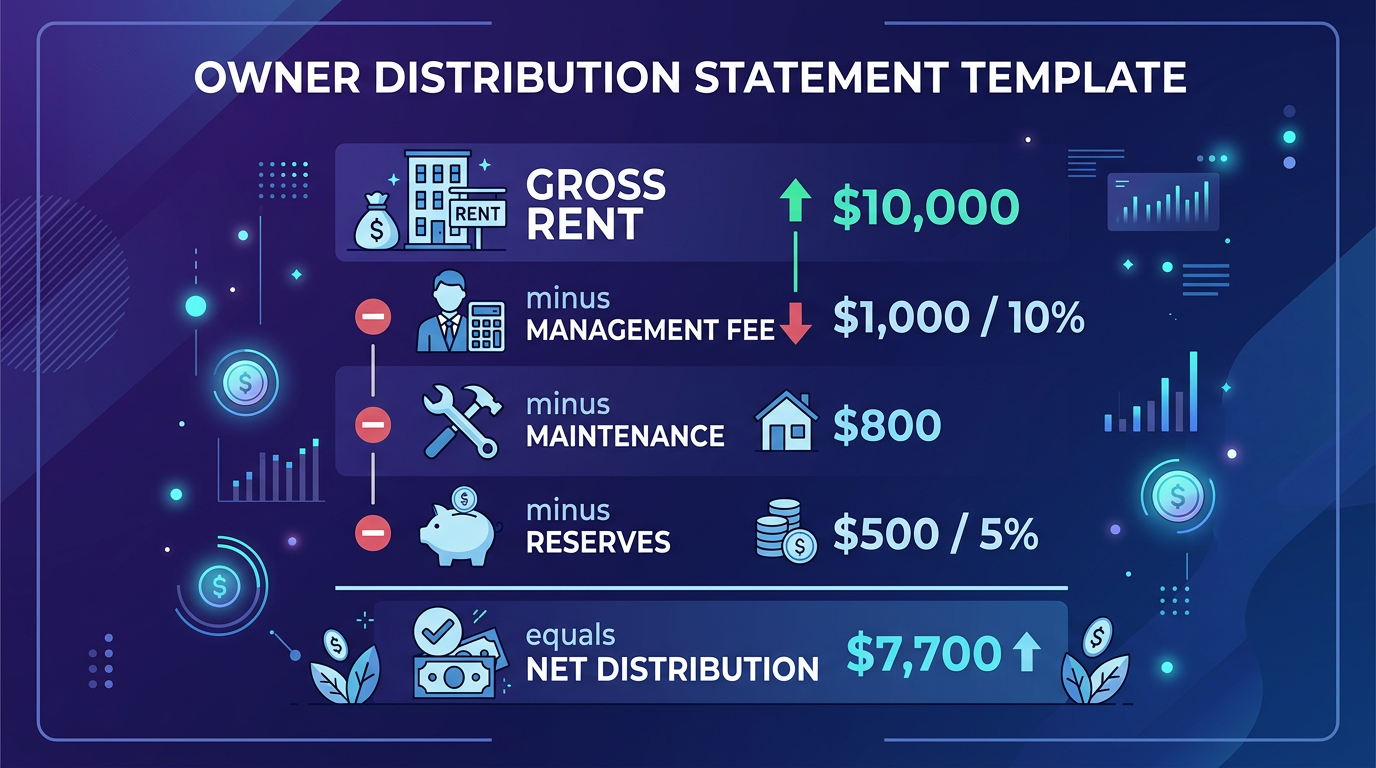
A complete owner distribution report isn’t just a check stub. It’s a mini financial statement that shows the full path from gross revenue to net distribution. Here’s what every report should include, line by line.
| Line Item | Amount | Notes |
|---|---|---|
| Gross Rent Collected | $8,400.00 | 4 units, all occupied |
| Late Fees Collected | $150.00 | Unit 2A, assessed per lease |
| Other Income (laundry, parking) | $320.00 | Coin-op + 2 reserved spaces |
| Total Income | $8,870.00 | |
| Management Fee (8%) | ($672.00) | 8% of gross rent collected |
| Maintenance & Repairs | ($1,240.00) | 3 work orders (see detail) |
| Utilities (owner-paid) | ($385.00) | Water/sewer, common electric |
| Insurance Premium | ($0.00) | Paid annually in January |
| Property Tax Escrow | ($0.00) | Paid semi-annually |
| Landscaping Contract | ($275.00) | Monthly service |
| Reserve Withholding | ($500.00) | Per management agreement |
| Total Deductions | ($3,072.00) | |
| Net Owner Distribution | $5,798.00 | ACH deposit 3/15 |
| Reserve Balance (Running) | $3,200.00 | Cumulative held |
Every line item above serves a purpose. Skip one, and you create confusion. The reserve balance at the bottom is particularly important — owners forget how much you’re holding, and showing the running total prevents the “where’s my money?” call every quarter.
The statement above is page one. Attach these behind it:
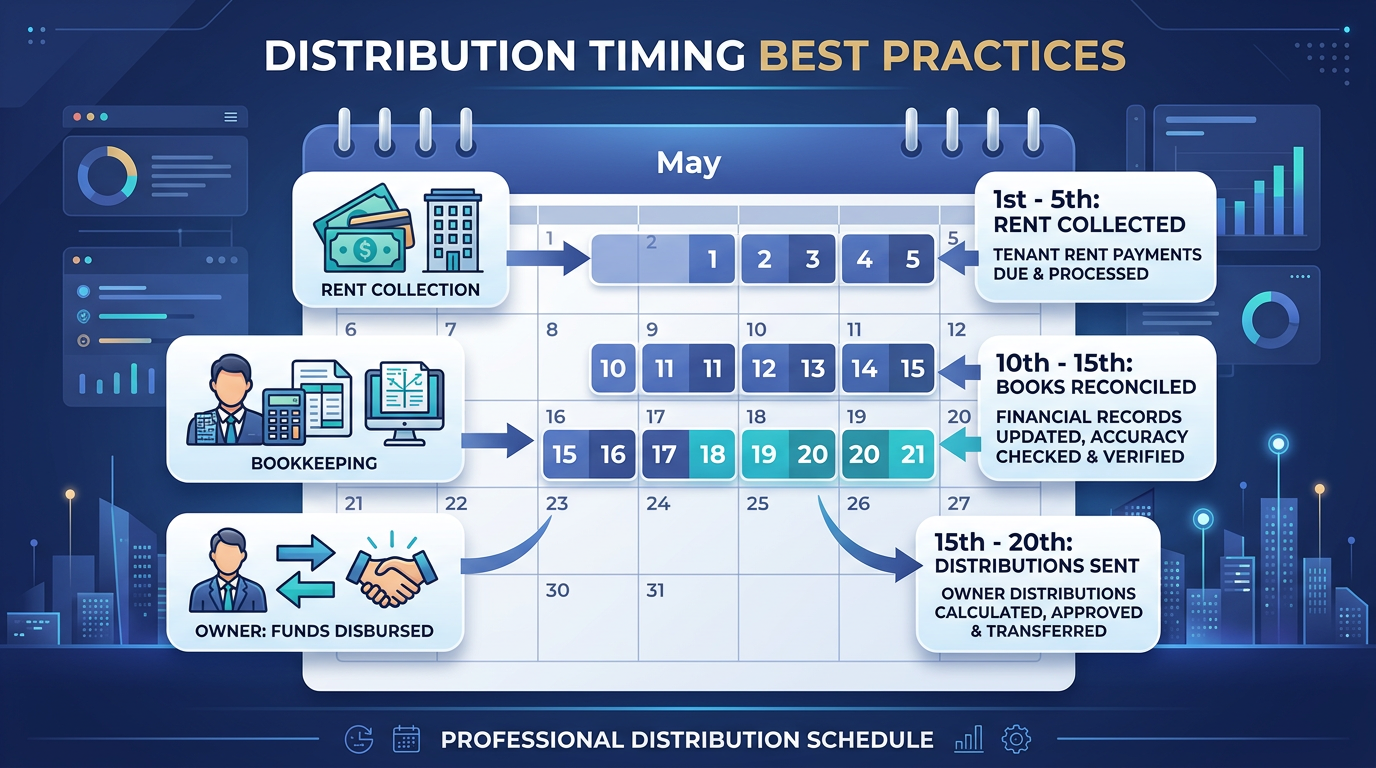
Most property management companies distribute on a monthly cycle, but the specific timing matters more than managers realize.
The most common cadence:
This means owners typically receive their distribution 20-25 days after rent is due. Set this expectation during onboarding, put it in writing, and reference it in every distribution report header.
Important: Never distribute funds before reconciling your trust account. A $500 error caught after distribution means clawing back money from an owner — a conversation nobody wants to have.
Some owners — especially those with mortgage payments due mid-month — push for faster distributions. Weekly distributions are operationally expensive but feasible if you charge for them.
Our recommendation: Stick with monthly unless the owner is willing to pay a premium (typically $50-$100/month surcharge). Weekly distributions double your reconciliation workload and increase error risk.
Reserve withholding is where most owner disputes originate. The owner sees $500 held back every month and does the math: that’s $6,000 a year “sitting in your account.”
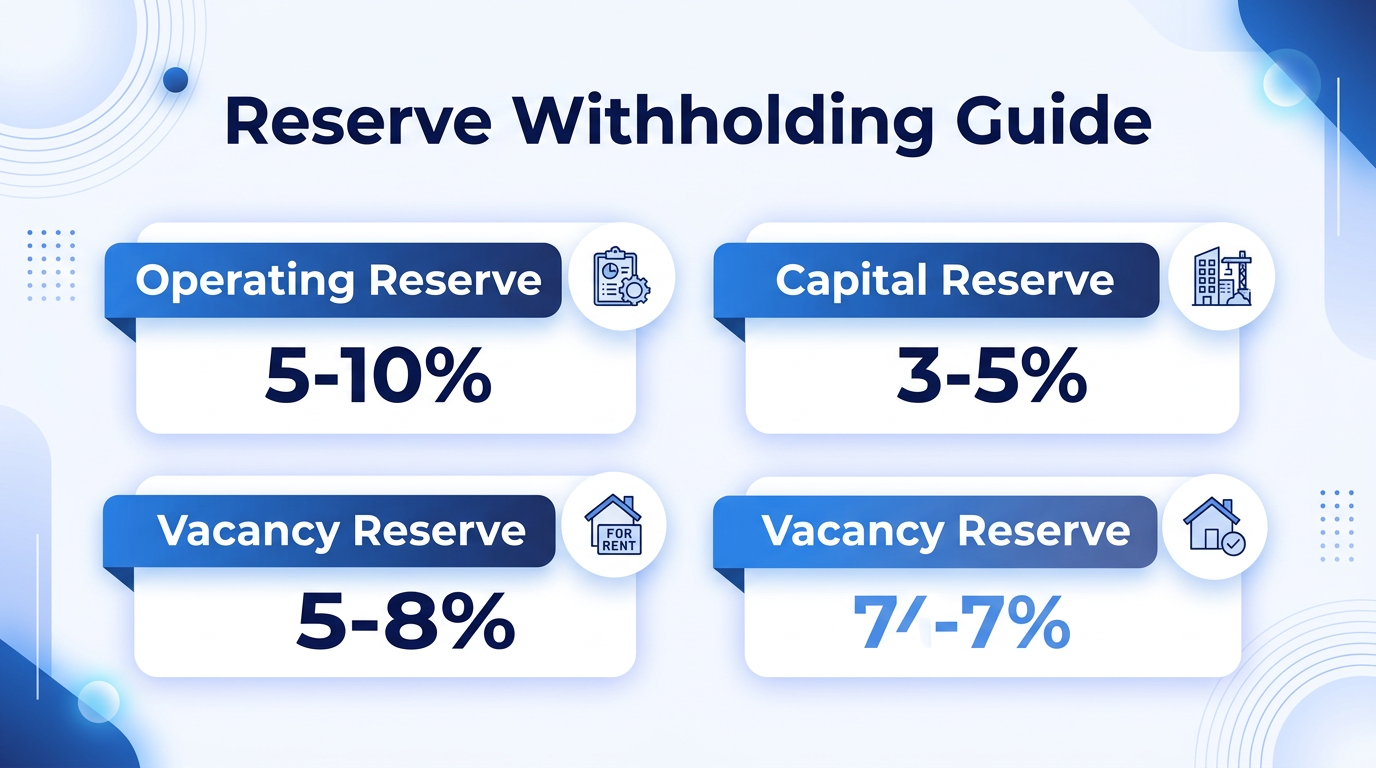
There’s no universal standard, but here’s what works for most portfolios:
The reserve should cover 2-3 months of average maintenance costs plus one emergency repair (water heater, HVAC failure, plumbing emergency). Pull your maintenance history from the last 24 months, calculate the monthly average, and multiply by 2.5.
Your management agreement should specify:
Show the reserve balance on every distribution statement. When you spend from reserves, show both the deduction and the reduced balance. Transparency here prevents 90% of reserve-related disputes.
It happens. A major repair hits, two units turn over simultaneously, or a seasonal vacancy pattern drains the reserve. The distribution is negative, and you have to tell the owner they owe you money.
Never surprise an owner with a negative distribution. The call should happen before the statement arrives:
When the distribution is negative, the statement format stays the same — but add a prominent line:
Owner Capital Call: $1,000.00 — clearly labeled, with a due date and payment instructions. Reference the specific expense that caused the shortfall and attach the vendor invoice.
Pro Tip: Track negative cash flow months by property over a rolling 24-month window. If a property goes negative more than twice a year, it’s time to discuss a rent increase, capital improvement plan, or reserve adjustment with the owner.
Owner distribution reports feed directly into year-end tax documents. If your monthly reports are sloppy, your 1099s will be wrong — and the IRS doesn’t accept “my property manager messed up” as an excuse.
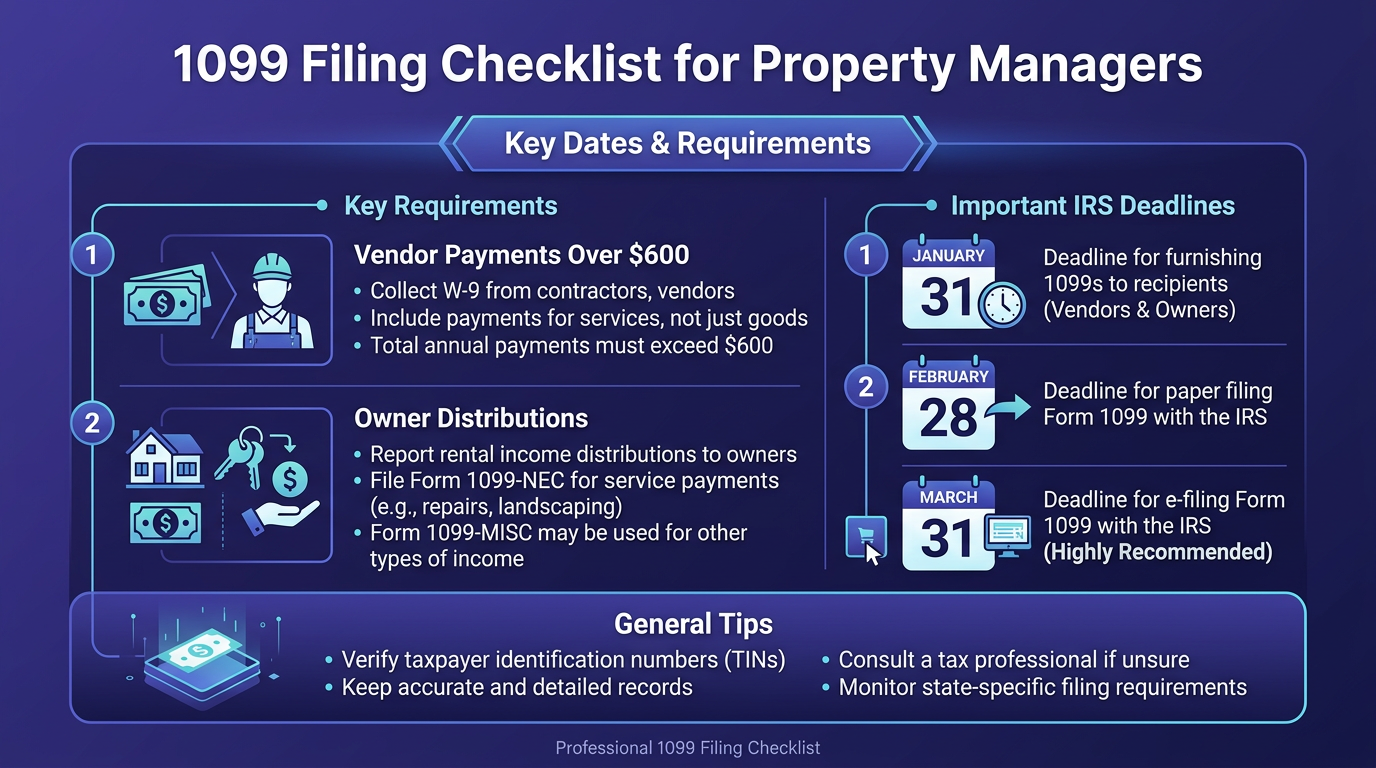
Under IRS regulations, you must issue a 1099-MISC to each property owner who receives $600 or more in distributions during the tax year. The amount reported in Box 1 (Rents) should equal the total net distributions for the year — not gross rent collected.
Key requirements:
Beyond the 1099, send each owner a year-end summary that includes:
This package saves the owner’s CPA hours of work and positions you as a professional operation — the kind of manager worth paying 8-10% for.
Manual distribution reports are a liability. They don’t scale past 50 units, they introduce human error, and they eat staff time that should go toward leasing and tenant relations.
Every major PM software platform handles owner distributions differently:
AppFolio generates owner statements automatically from posted transactions. You can customize the template, add your logo, and schedule distributions on a recurring cycle. The owner portal gives real-time access to statements, which reduces inbound calls by 40-60%.
Buildium offers automated owner statements with a built-in approval workflow. You review the statement, approve the distribution, and the system initiates the ACH transfer. The owner sees it in their portal within 24 hours.
For QBO-based setups, you’ll need a manual or semi-automated process. Export the relevant transactions by class (property), build the statement in a template, and track distributions in a separate ledger. Tools like class and location tracking in QuickBooks make this manageable, but it’s never as seamless as native PM software.
Automate everything except judgment calls:
The goal is a 15-minute review per owner per month, not a 15-minute build. If you’re spending more than 2 hours on distributions for a 200-unit portfolio, your process needs re-engineering.
The distribution report is your most powerful retention tool. Not your marketing. Not your leasing speed. The monthly statement that proves you’re managing their asset responsibly.
Benchmark against market. Include a one-liner on the statement: “Average rent for comparable 2BR units in this submarket: $1,450. Your current rent: $1,375. Recommended increase at renewal: $75.” This shows you’re watching the market and maximizing their returns.
Show your work on maintenance. Don’t just list “Plumbing — $480.” Show “Plumbing — replaced garbage disposal, Unit 3A kitchen, vendor: ABC Plumbing, 3 competitive bids obtained, warranty: 2 years.” The detail builds confidence.
Provide year-over-year comparisons. A simple column showing last year’s distribution vs. this year’s gives owners context. A 5% increase in net distributions is a story you want to tell.
Flag upcoming expenses proactively. If you know the roof needs replacement in 18 months, mention it in the report now. “Note: Roof inspection completed 2/10. Estimated remaining life: 18-24 months. Recommended reserve increase of $200/mo to prepare.” Owners respect managers who plan ahead.
The National Association of Residential Property Managers (NARPM) publishes best practice guidelines for owner reporting that are worth reviewing annually. Aligning your reports with industry standards gives you credibility during the onboarding pitch.
Your distribution report should reference — but not duplicate — your security deposit accounting records. When a tenant moves out and you apply the deposit against damages, the distribution report should show the net impact: deposit applied, remaining refunded, and any balance forwarded to the owner as income.
This is where property management accounting gets complex, and it’s exactly why many PM companies outsource their bookkeeping to specialists who understand trust accounting, distribution reporting, and the regulatory requirements that come with managing other people’s money.
Ready to clean up your property management books? Steph’s Books specializes in bookkeeping for property management companies — from trust accounting and owner distributions to 1099 filing and month-end close. Get started with a free consultation →
Answer a few quick questions for an instant, no-obligation quote — no sales call required. See how Steph's Books saves you 40-60% vs. hiring in-house.