67% of property managers cite bookkeeping as their single biggest operational headache. Not leasing. Not maintenance. Bookkeeping.
The root cause isn’t the accounting itself — it’s the software stack. The platform you choose determines whether bank reconciliation takes 2-3 days per month or 2-3 hours. Whether 1099s go out on time or trigger $310-per-form penalties. Whether trust accounting stays compliant or puts your license at risk.
Here’s the breakdown of every major option in 2026 — with specific pricing, trust accounting capabilities, and our recommendation by portfolio size.
There’s no single “best” platform. The right choice depends on your portfolio size, property type, and whether you need accounting baked into your PM workflow or bolted on.
AppFolio, Buildium, Yardi Breeze, Rent Manager, Entrata, DoorLoop — these bundle tenant management, maintenance tracking, and accounting into one system. Rent payments flow directly into your ledger. Owner statements generate automatically.
The upside: zero data migration between systems. Every lease, charge, and payment lives in one place.
The downside: accounting depth varies wildly. Some handle trust accounting natively. Others treat it as an afterthought.
Pair any PM tool with QuickBooks Online or Xero for more accounting flexibility. This is common when your CPA or bookkeeper standardizes on QBO across all clients.
The tradeoff is real: you’re maintaining two systems, syncing data between them, and reconciling discrepancies. AppFolio and Buildium both offer QBO integrations, but they push journal entries — not line-item detail. That means your QBO ledger won’t show individual tenant transactions without manual mapping.
Stessa, REI Hub, Landlord Studio — built for landlords self-managing small portfolios (under 20 units). They pull bank transactions automatically, categorize by property, and generate Schedule E reports.
These are not property management platforms. No tenant portals, no maintenance workflows, no lease tracking. But if you’re a hands-on landlord who just needs clean books, they cost a fraction of full PM software.
| Software | Type | Min Portfolio | Pricing (2026) | Trust Accounting | Owner Reports | Best For |
|---|---|---|---|---|---|---|
| AppFolio | All-in-One PM | 50 units | $1.49/unit/mo (min $74.50) | Native, full compliance | Automated + portal | Mid-to-large PM companies |
| Buildium | All-in-One PM | No minimum | $62-$375/mo flat rate | Native, three-way recon | Automated + portal | Small-to-mid PM (20-200 units) |
| Yardi Breeze | All-in-One PM | No minimum | $1-$2/unit/mo (min $100) | Native | Automated | Mixed residential + commercial |
| Rent Manager | All-in-One PM | No minimum | Custom pricing | Native, highly configurable | Automated | Complex portfolios, experienced users |
| Entrata | All-in-One PM | 200+ units | Custom (enterprise) | Native | Automated + API | Large multifamily operators |
| DoorLoop | All-in-One PM | No minimum | $69-$149/mo | Basic | Automated | Budget-conscious small PMs |
| QuickBooks Online | Accounting Only | N/A | $35-$235/mo | Manual setup only | Manual or custom | Paired with any PM platform |
| Stessa | Investor Tool | No minimum | Free (Pro: $12/mo) | No | Property-level P&L | Self-managing landlords, <20 units |
| REI Hub | Investor Tool | No minimum | $15-$25/mo | No | Schedule E ready | Tax-focused landlords |
Key takeaway: If you’re managing properties for other owners, you need native trust accounting. That eliminates QBO-only setups and investor tools from consideration.
This is where property management accounting diverges from every other industry. Security deposits are liabilities, not revenue — and misclassifying them is the #1 accounting error we see in PM companies.
Commingling trust funds with operating funds isn’t just bad accounting. In most states, it’s grounds for license revocation. California requires trust accounts to be reconciled monthly. New York mandates deposits held in interest-bearing accounts with interest paid to tenants. Florida requires written notice of the bank and account number within 30 days.

Every month, three numbers must match:
When these three don’t match, you have a problem. A $200 discrepancy could be a mis-posted payment. A $2,000 discrepancy could be an unauthorized disbursement.
AppFolio and Buildium both enforce trust accounting natively. Deposits post to liability accounts automatically. Three-way reconciliation reports are built in. You can run them in under 10 minutes.
Yardi Breeze handles trust accounting but with less granular audit trails than AppFolio at the base tier.
QuickBooks Online alone does NOT handle trust accounting. You’d need to manually create separate bank accounts, build custom reports, and maintain individual tenant sub-ledgers. It’s possible — but it’s 3-4x the labor, and one mistake puts you out of compliance.
The “Aha” Calculation: If you manage 100 units with an average security deposit of $1,800, you’re holding $180,000 in trust. At a misclassification rate of even 2%, that’s $3,600 in liability errors on your books — enough to trigger an audit finding and potentially a state investigation. The cost of proper trust accounting software ($62-$150/mo) pays for itself by avoiding a single compliance event.
The software is the easy half
Whichever platform you pick, someone still has to reconcile trust accounts, handle owner distributions, and close the month. That is the part we do.
Get an instant quoteTalk to us firstYour owners expect a monthly financial package. At minimum, that includes:
AppFolio, Buildium, and Yardi generate these automatically with owner portal access. Owners log in and pull their own statements — eliminating the email-and-PDF cycle entirely.
Two forms matter for property management:
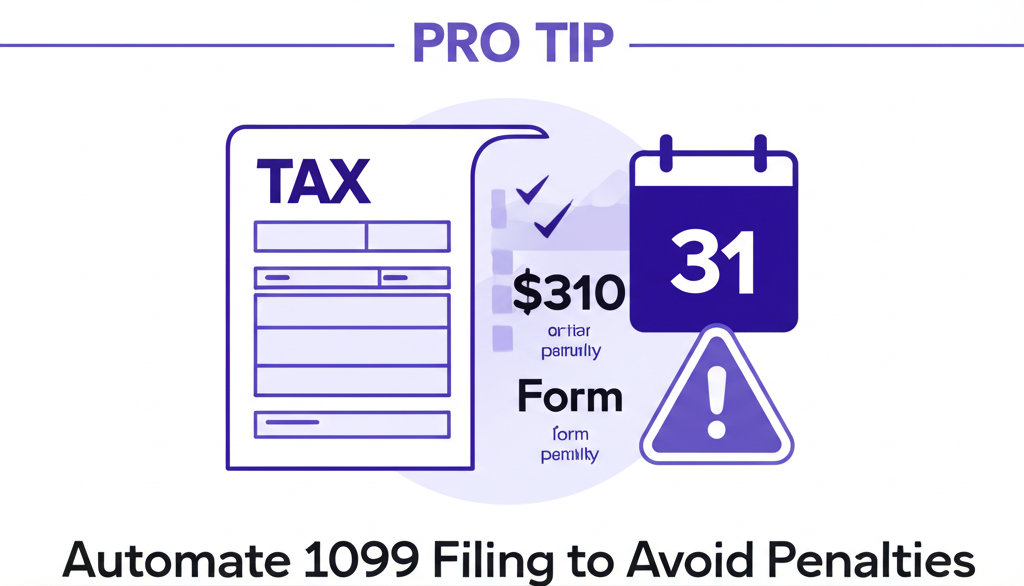
The deadline is January 31. Miss it, and the penalty is $310 per form filed late (2026 rate). Managing 50 owners and 30 contractors? That’s potentially $24,800 in penalties for missing the deadline.
| Platform | Auto-generates 1099s | E-files to IRS | Tracks contractor payments |
|---|---|---|---|
| AppFolio | Yes | Yes (built-in) | Yes |
| Buildium | Yes | Yes (built-in) | Yes |
| Yardi Breeze | Yes | Via integration | Yes |
| Rent Manager | Yes | Yes | Yes |
| QuickBooks Online | Yes | Yes ($15/contractor) | Yes |
| Stessa | No | No | No |
AppFolio and Buildium include 1099 e-filing at no additional cost. QBO charges $15 per contractor for e-filing through its 1099 module — manageable for a handful of contractors, expensive at scale.
If you manage commercial properties, Common Area Maintenance (CAM) reconciliation is a non-negotiable annual process that most residential-focused PM software handles poorly.
Tenants pay estimated CAM charges monthly based on their pro-rata share by square footage. At year-end, you reconcile estimated charges against actual expenses:
A tenant occupying 3,000 sq ft in a 30,000 sq ft building has a 10% pro-rata share. If actual CAM expenses for the year were $120,000 and estimated charges billed were $110,000, that tenant owes an additional $1,000 ($10,000 shortfall x 10%).
Multiply that across 15-20 tenants with different lease terms, expense caps, and base year adjustments, and you’re looking at a reconciliation that takes 20-40 hours manually.
Yardi Voyager is the gold standard for CAM reconciliation. It handles base year calculations, gross-up provisions, expense caps, and multi-tenant allocation automatically.
AppFolio Plus added CAM reconciliation features in 2025, making it viable for mixed residential-commercial portfolios. The standard tier doesn’t support it.
Buildium is primarily residential and offers no native CAM reconciliation. You’d need to export data to Excel or QBO and calculate manually.
If commercial properties are more than 20% of your portfolio, Yardi is the answer. No other platform matches its depth for commercial accounting.
Stessa (free) or DoorLoop ($69/mo) + QuickBooks Online ($35/mo)
At this scale, you don’t need enterprise PM software. Stessa automatically imports bank transactions, categorizes by property, and generates tax-ready reports. If you need tenant portals and online rent collection, DoorLoop is the most affordable full PM platform.
Total cost: $0-$104/mo
Buildium ($62-$375/mo, flat rate)
Buildium’s flat-rate pricing is the differentiator here. At 100 units, AppFolio costs $149/mo ($1.49/unit) while Buildium’s Growth plan is $166/mo — comparable. But at 200 units, AppFolio jumps to $298/mo while Buildium caps at $375/mo regardless of unit count.
More importantly, Buildium has no minimum unit requirement. You can start at 20 units without paying for 50.
Total cost: $62-$375/mo (all-inclusive)
AppFolio ($1.49/unit/mo) or Yardi Breeze ($1-$2/unit/mo)
At scale, AppFolio’s per-unit pricing becomes cost-effective because you’re paying for exactly what you use. The platform’s AI-powered accounting features — automated invoice coding, smart bank reconciliation, and anomaly detection — save 15-20 hours/month for portfolios over 500 units.
Yardi Breeze offers a similar per-unit model with stronger commercial property support.
Total cost: $300-$1,000+/mo depending on portfolio
Yardi Voyager (enterprise, custom pricing)
No debate here. If you manage commercial properties at scale, Yardi Voyager’s CAM reconciliation, lease abstraction, and tenant billing capabilities are unmatched. Expect custom pricing starting around $1,500/mo for mid-size commercial portfolios.
The right software eliminates data entry. It doesn’t eliminate the need for someone who actually understands the numbers.
Here’s what a specialized property management bookkeeper handles that software alone can’t:
We work inside your existing PM platform. Whether you’re on AppFolio, Buildium, Yardi, or QBO — we log into your system, not ours. No data exports, no duplicate entry, no reconciliation between two disconnected ledgers.
The result: you focus on leasing, maintenance, and owner relationships. We make sure the books are clean, compliant, and closed by the 15th of every month.
Answer a few quick questions for an instant, no-obligation quote — no sales call required. See how Steph's Books saves you 40-60% vs. hiring in-house.