Here’s a statistic that should keep every business owner up at night: the Association of Certified Fraud Examiners (ACFE) 2024 Report to the Nations found that the median loss from occupational fraud is $117,000 per scheme. The median duration before detection? 12 months. That means the average fraud at your company has been running for a full year before anyone notices — and by the time it surfaces, six figures have already walked out the door.
Worse still, small businesses lose almost twice as much per fraud scheme as larger organizations. Why? Because small and mid-size firms typically lack the internal controls, segregation of duties, and oversight infrastructure that larger companies use to catch problems early. If you’re running a professional services firm billing $1M-$10M in revenue, you’re in the highest-risk category — large enough to have meaningful cash flow, but lean enough that one trusted employee can do serious damage.
This is where forensic accounting and fraud detection come in. Whether you’re dealing with a suspicious transaction right now or want to make sure your business is protected, this guide covers everything you need to know — what forensic accounting actually involves, the most common fraud schemes that hit professional services firms, the warning signs you should be watching for, and the internal controls that stop fraud before it starts.
Forensic accounting is the application of accounting, auditing, and investigative techniques to examine financial records for evidence of fraud, embezzlement, or financial misconduct. Think of it as the intersection of accounting expertise and detective work — forensic accountants don’t just crunch numbers, they follow money trails, reconstruct transactions, identify anomalies, and produce findings that can hold up in legal proceedings.
The word “forensic” literally means “suitable for use in a court of law.” That distinction matters. A regular accountant prepares your financial statements and files your taxes. A forensic accountant investigates whether someone has been manipulating those financial statements — and produces evidence that attorneys, regulators, and judges can rely on.
| Dimension | Regular Accounting | Forensic Accounting |
|---|---|---|
| Primary goal | Record, classify, and report financial activity accurately | Detect, investigate, and quantify financial fraud or irregularities |
| Perspective | Assumes transactions are legitimate | Assumes nothing — examines every transaction with professional skepticism |
| Output | Financial statements, tax returns, management reports | Investigation reports, expert witness testimony, litigation support |
| Timing | Ongoing, cyclical (monthly/quarterly/annual) | Triggered by suspicion, complaint, or regulatory action |
| Skills required | GAAP knowledge, tax code, software proficiency | Investigative techniques, legal standards, data analytics, interviewing |
| Legal weight | Internal business use | Admissible in court proceedings and regulatory filings |
For professional services firms, you’ll likely never need a full forensic investigation — unless something goes wrong. But the principles of forensic accounting — skepticism, verification, and audit trails — should be baked into your everyday bookkeeping processes. That’s how you catch problems at the $500 stage instead of the $117,000 stage.
According to the ACFE, occupational fraud falls into three broad categories: asset misappropriation (stealing company assets), corruption (conflicts of interest, bribery, extortion), and financial statement fraud (cooking the books). Asset misappropriation accounts for 86% of all cases — and that’s exactly the category where professional services firms are most vulnerable.
Here are the six fraud schemes that hit small and mid-size businesses most frequently:
Embezzlement is the misappropriation of funds by someone entrusted to manage them. In a professional services firm, this often looks like an office manager or bookkeeper diverting client payments to a personal account, writing company checks to themselves, or making unauthorized transfers. Because the perpetrator typically has legitimate access to the accounts, embezzlement can continue undetected for years.
Real-world pattern: A law firm office manager processes client trust deposits daily. Over 18 months, she diverts $340,000 by depositing checks into a personal account with a similar name to the firm’s trust account. No one catches it because she’s the only person who handles bank deposits and reconciliations.
Billing fraud involves submitting false invoices to the company for payment. The perpetrator might create a shell company, submit invoices for goods or services never delivered, or inflate legitimate vendor invoices and pocket the difference. This is the most common occupational fraud scheme, accounting for 22% of all cases.
Real-world pattern: An operations manager at an engineering consultancy sets up a fictitious IT consulting company. He submits monthly invoices for $4,500 in “technology support services” and approves his own invoices. Over two years, $108,000 disappears into the shell company.
Payroll fraud includes ghost employees (fictitious workers on the payroll), falsified hours or overtime, unauthorized pay raises, and commission manipulation. This scheme is particularly common in firms where one person handles both payroll setup and payroll processing.
Real-world pattern: A property management firm’s HR coordinator creates two “ghost employees” and routes their direct deposits to accounts she controls. The phantom paychecks total $2,400 per pay period — $62,400 per year — and don’t trigger scrutiny because they fall within normal salary ranges.
Expense fraud involves submitting fictitious or inflated expense reports. Common tactics include submitting personal expenses as business costs, inflating mileage or per diem claims, submitting duplicate receipts, or fabricating receipts entirely. With the proliferation of digital receipt tools, this has become both easier to commit and harder to detect.
Check tampering includes forging signatures on company checks, altering payees, intercepting checks before delivery, and issuing unauthorized checks. Although electronic payments have reduced check fraud, many professional services firms still use checks for vendor payments, rent, and contractor disbursements.
Skimming is theft of cash before it enters the accounting system. The money is stolen before it’s ever recorded — meaning it doesn’t show up as a missing transaction. For professional services firms that accept cash or check payments from clients, skimming can be nearly invisible without proper deposit verification procedures.
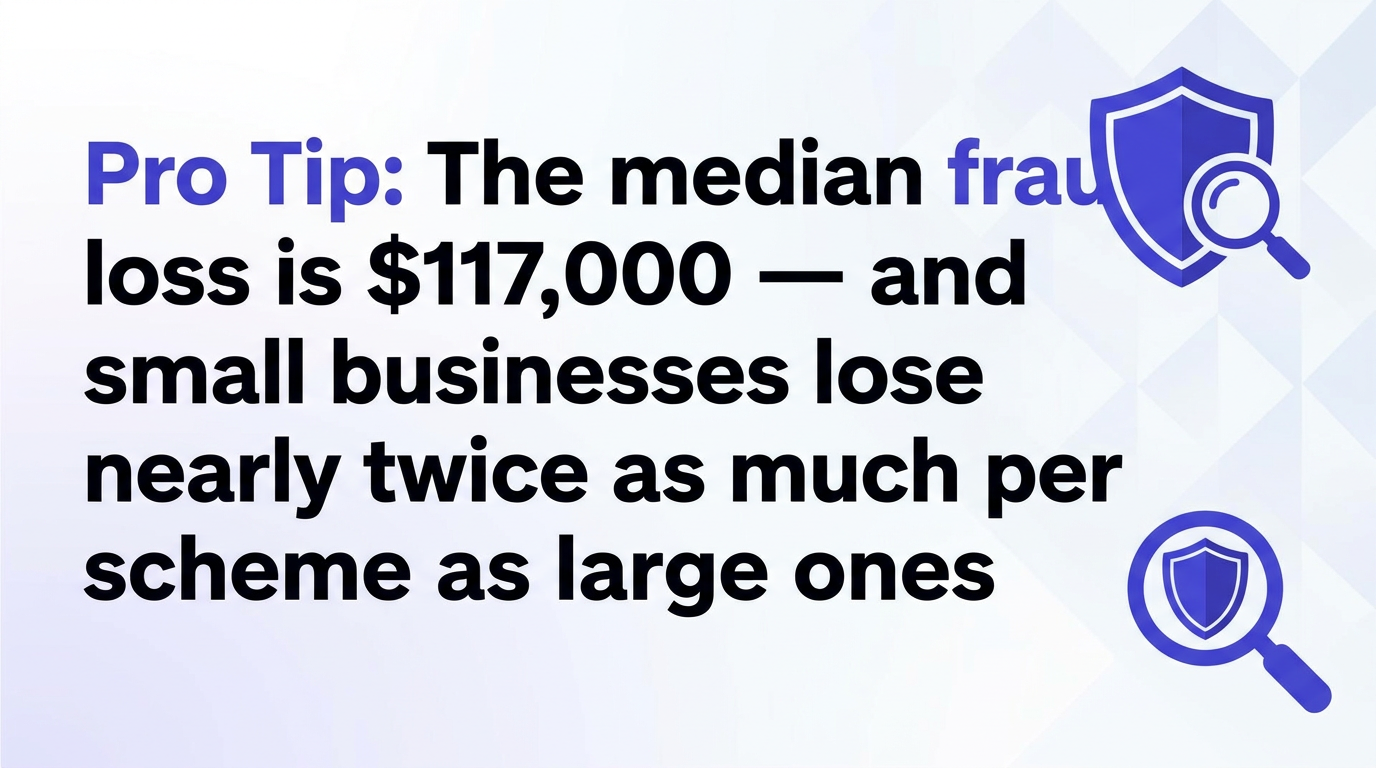
Fraud rarely happens in a vacuum. In almost every case, there are behavioral and financial red flags that precede or accompany the scheme. The ACFE found that 43% of occupational fraud cases were initially detected by tips — meaning someone noticed something “off” and spoke up. Training yourself and your team to recognize these warning signs is one of the most cost-effective fraud prevention measures you can implement.
Pro Tip: Run a quick health check on your financial controls. Our free Bookkeeping Health Check tool identifies gaps in your processes that could leave you vulnerable to fraud — it takes less than 5 minutes.
Criminologist Donald Cressey developed the Fraud Triangle in the 1950s, and it remains the foundational framework for understanding why occupational fraud happens. Every fraud case involves three elements converging:
The person faces a financial or personal pressure they feel they can’t solve through legitimate means. This could be personal debt, a gambling problem, medical bills, a lifestyle they can’t afford, or even pressure to meet unrealistic business targets. The FBI’s white-collar crime unit notes that financial pressure is present in the vast majority of embezzlement cases.
The person has access to company assets and the ability to conceal the theft. This is the element that business owners have the most control over. Weak internal controls, lack of oversight, poor segregation of duties, and infrequent audits all create opportunity. In small businesses, opportunity is often wide open — one person handles cash, processes payments, reconciles accounts, and produces financial reports with zero oversight.
The person justifies their actions to themselves. Common rationalizations include: “I’m just borrowing it — I’ll pay it back,” “They don’t pay me what I’m worth,” “Nobody will miss it,” “I deserve this after everything I’ve done for the company,” or “Everyone does it.” Rationalization allows otherwise honest people to commit fraud without seeing themselves as criminals.
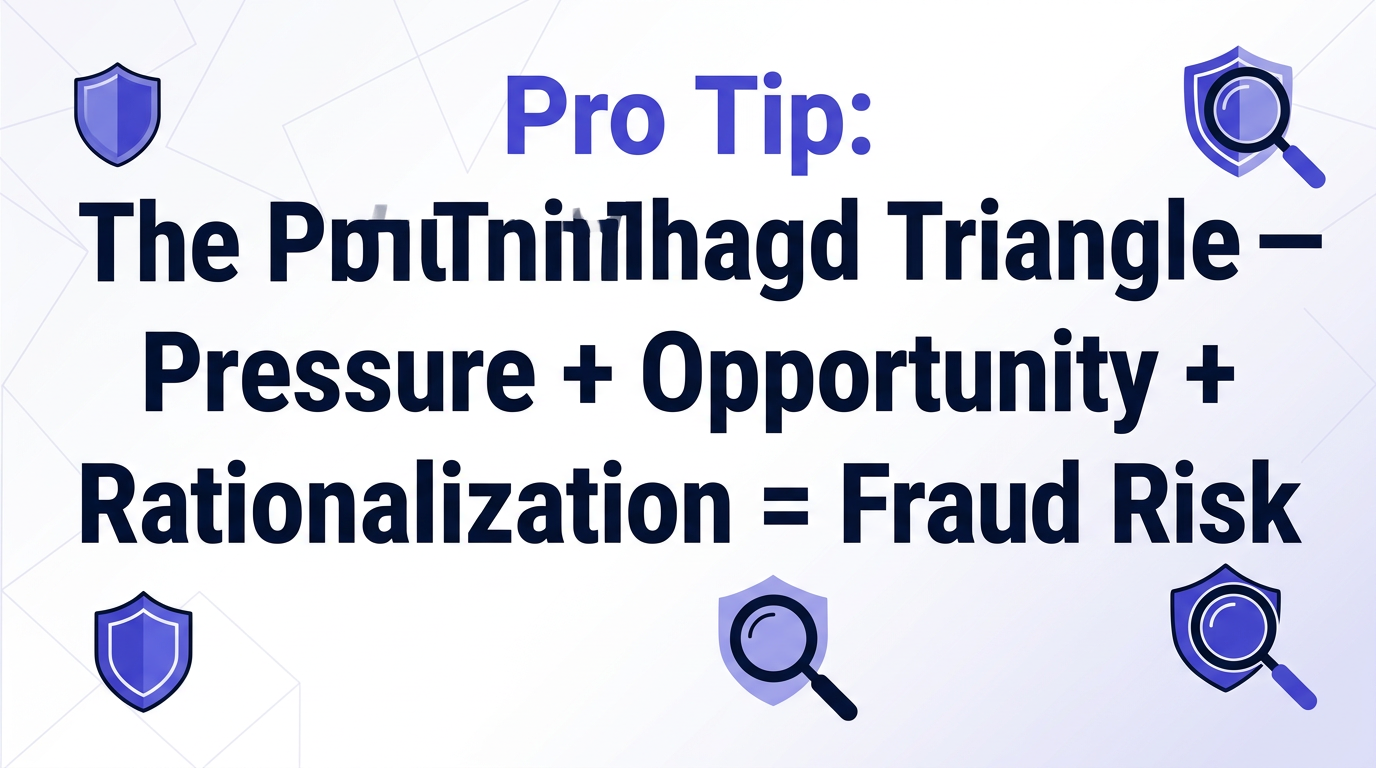
The critical insight: you can’t control pressure or rationalization, but you can eliminate opportunity. That’s what internal controls are designed to do — remove the opportunity leg of the triangle so that even someone under financial pressure who can rationalize theft simply doesn’t have the access or cover to pull it off.
When fraud is suspected, a forensic accounting investigation typically follows a structured process. Understanding this process helps you know what to expect — and also highlights why maintaining clean, well-organized books is so important. The cleaner your records, the faster and less expensive any investigation will be.
The forensic accountant meets with management or legal counsel to understand the nature of the suspected fraud, the scope of the investigation, and the relevant time period. They review organizational charts, identify key personnel, and determine which financial systems and records will need examination.
This phase involves gathering all relevant financial documents — bank statements, canceled checks, vendor invoices, payroll records, expense reports, general ledger entries, and electronic transaction records. Chain of custody is maintained throughout, because this evidence may eventually be used in court. Forensic accountants also preserve electronic evidence, including emails, accounting software databases, and computer files.
Using specialized forensic accounting software and techniques, the investigator analyzes the collected data for anomalies. Common analytical techniques include:
The forensic accountant conducts structured interviews with relevant employees — starting with peripheral personnel and working inward toward the suspect. These interviews are carefully planned and documented. The goal is to corroborate (or contradict) the documentary evidence.
The investigation concludes with a detailed report documenting findings, methodology, evidence, and conclusions. This report is designed to be understood by non-accountants (judges, juries, attorneys, board members) and often includes visual timelines, transaction flow charts, and loss quantification.
Important: A forensic investigation into a mid-size fraud scheme typically costs $20,000-$75,000 in professional fees. Prevention through strong internal controls costs a fraction of that. The math is straightforward: invest in controls now or pay for investigation and losses later.
You don’t need a forensic accountant on retainer. What you need are internal controls — systematic checks and procedures that make fraud difficult to commit and easy to detect. For professional services firms in the $1M-$10M range, the following controls deliver the highest fraud-prevention ROI:
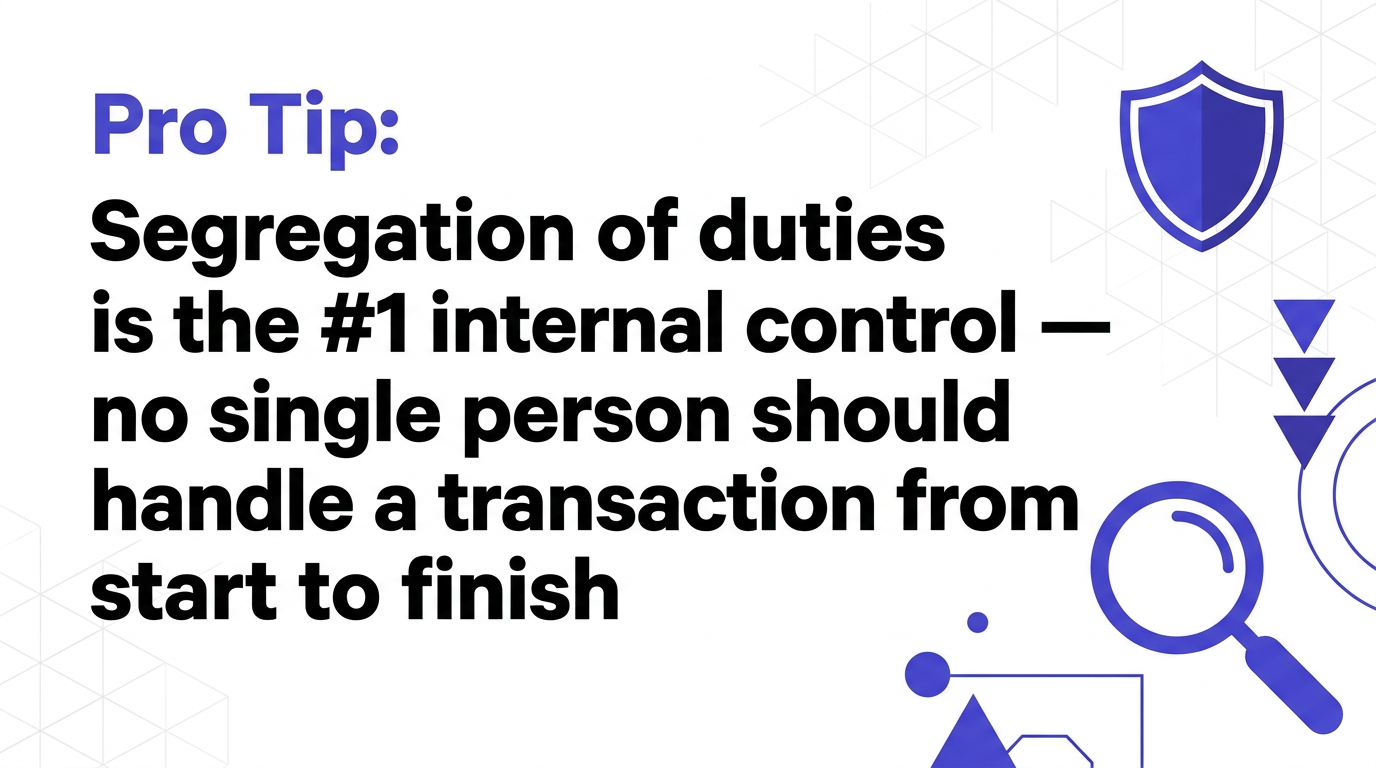
This is the single most important internal control. No one person should control an entire financial process from start to finish. At minimum, separate these three functions:
If one person currently handles all three — for example, your office manager approves vendor payments, writes the checks, and records the transactions in QuickBooks — you have a segregation-of-duties problem that needs immediate attention.
For lean teams, outsourcing your accounts payable or accounts receivable to an external bookkeeping firm creates natural segregation — the internal team authorizes, the external team records, and a third party (your CPA) reviews.
Bank reconciliation is your first line of defense against fraud. Every transaction that flows through your bank accounts should be matched against your internal records — monthly at minimum, weekly for high-volume businesses. Reconciliation catches unauthorized transactions, duplicate payments, and unexplained discrepancies before they compound.
The key: the person who reconciles should NOT be the same person who processes payments. If your bookkeeper both processes vendor payments and reconciles the bank account, they can write an unauthorized check and then hide it during reconciliation. Professional bank reconciliation services provide independent verification that your accounts are clean.
Scheduled audits are predictable — fraudsters know when to clean up their tracks. Unannounced spot checks of petty cash, expense reports, vendor files, and bank statements create uncertainty that deters fraud. You don’t need a full audit; even a quarterly review of 20-30 random transactions sends a powerful message that someone is watching.
Require two signatures on checks or electronic transfers above a set threshold (commonly $2,500-$5,000 for firms in your revenue range). Implement tiered approval levels where larger expenditures require sign-off from a partner or owner. This doesn’t slow down operations for routine expenses, but it creates a checkpoint for significant disbursements.
Require every employee with financial responsibilities to take at least one consecutive week of vacation per year — with someone else covering their duties. Many fraud schemes are discovered when the perpetrator is away and their replacement notices unusual transactions, vendor relationships, or workarounds that don’t make sense.
Periodically verify that all vendors in your system are legitimate businesses with valid tax IDs, physical addresses, and active contacts. Cross-reference vendor bank accounts against employee bank accounts. For payroll, have someone other than the payroll processor verify the employee roster quarterly — confirm that every person on payroll actually works at the company.
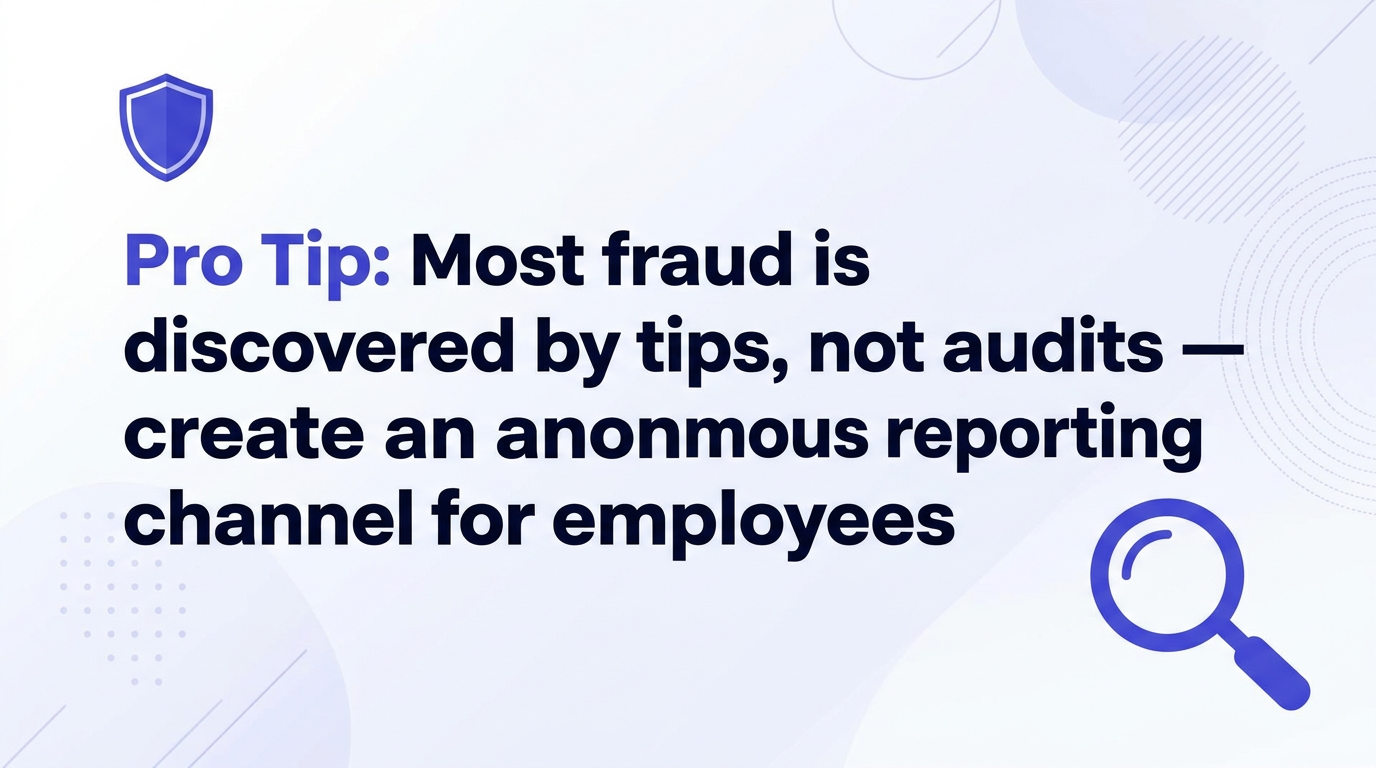
The ACFE consistently finds that tips are the #1 fraud detection method. Create a way for employees, vendors, and clients to report concerns anonymously — whether that’s a dedicated email address, a third-party hotline, or an online form. Organizations with hotlines detect fraud 50% faster and lose 50% less per scheme.
The business owner or managing partner should personally review bank statements, credit card statements, and key financial reports every month. You don’t need to audit every transaction — just scan for anything unfamiliar. An owner who regularly reviews the numbers is the strongest deterrent against internal fraud.
| Fraud Type | Warning Signs | Prevention Measures | Typical Loss Range |
|---|---|---|---|
| Embezzlement | Unexplained cash shortages, altered bank deposits, employee living beyond means | Segregation of duties, independent bank reconciliation, dual signatures | $50,000 – $500,000+ |
| Billing Schemes | Unknown vendors, P.O. Box-only addresses, invoices with no detail, rising costs without explanation | Vendor verification, purchase order matching, approval thresholds | $25,000 – $250,000 |
| Payroll Fraud | Ghost employees, overtime spikes, employees with identical bank accounts | Independent payroll review, headcount verification, segregated payroll processing | $20,000 – $150,000 |
| Expense Fraud | Duplicate receipts, round-number claims, excessive mileage, personal items as business expenses | Receipt verification, manager approval, expense policy enforcement, random audits | $5,000 – $50,000 |
| Check Tampering | Missing checks, altered payees, sequential check gaps, forged signatures | Positive pay with bank, locked check stock, dual signatures, electronic payments | $15,000 – $200,000 |
| Skimming | Revenue shortfalls vs. projections, customer complaints about payments not posted, cash-to-accrual discrepancies | Pre-numbered receipts, deposit verification, point-of-sale controls, accounts receivable aging review | $10,000 – $100,000 |
Discovering — or even suspecting — fraud at your company is deeply unsettling. Your instincts might push you to confront the suspected employee immediately, but that’s the wrong move. Here’s the step-by-step approach that protects your evidence, your legal position, and your business:
As counterintuitive as it feels, do not confront the suspected individual. Premature confrontation gives them time to destroy evidence, resign, or create a cover story. Stay calm and move to documentation.
Immediately secure copies of all financial records that could be relevant — bank statements, canceled checks, invoices, expense reports, payroll records, and accounting software backups. Create copies before anyone can alter or destroy originals. If the suspect has access to the accounting system, consider restricting their permissions (discreetly, through IT) or backing up the database to a secure location.
Before you do anything else, speak with an attorney who specializes in business litigation or employment law. They’ll advise you on how to proceed without exposing your company to liability — including wrongful termination claims if the suspect turns out to be innocent. Attorney-client privilege also protects communications about the investigation.
Hire a forensic accountant to conduct a formal investigation. They have the training, tools, and methodology to quantify the loss, establish the evidence chain, and produce a report that stands up in legal proceedings. Your regular CPA or bookkeeper — no matter how competent — doesn’t have the forensic training for this work.
Based on your attorney’s guidance, file reports with the appropriate authorities. For tax-related fraud, report to the IRS via Form 3949-A. For significant financial crimes, contact your local FBI field office. Filing a police report also creates an official record that supports insurance claims and civil recovery efforts.
Once the investigation is complete, implement the control improvements identified during the process. Every fraud investigation reveals specific weaknesses that were exploited — close them. This is also the time to evaluate whether your bookkeeping infrastructure is adequate or whether it needs a complete overhaul. Our catch-up bookkeeping guide walks through the process of getting disorganized books back to a clean, controlled state.
The best fraud prevention isn’t a forensic investigation after the fact — it’s professional bookkeeping that makes fraud nearly impossible to commit or sustain in the first place. Here’s why consistent, professional bookkeeping is your strongest fraud deterrent:
When bank accounts, credit cards, and loan accounts are reconciled every month, unauthorized transactions surface within 30 days — not 12 months. A professional bookkeeping team independently verifying every transaction against your bank feed creates an ongoing audit function that runs every single month. That’s 12 checkpoints per year instead of zero.
When your bookkeeping is handled by an outsourced bookkeeping team, you automatically get segregation of duties. Your internal team authorizes expenditures and handles operations. Your bookkeeping team records transactions and reconciles accounts. Your CPA reviews the output. No single person controls the entire financial process — which means no single person can commit and conceal fraud.
A professional bookkeeper who works with dozens of businesses develops pattern recognition that business owners simply don’t have. They notice when vendor payments don’t follow normal patterns, when expense categories spike without explanation, or when payroll numbers don’t add up. They ask questions — and those questions are exactly what catches fraud.
If fraud is ever suspected, clean and well-organized books dramatically reduce investigation time and cost. Forensic accountants can move quickly through organized records; disorganized books add weeks or months (and tens of thousands of dollars) to every investigation.
Pro Tip: Not sure if your current bookkeeping setup provides adequate fraud protection? Get an instant quote for professional bookkeeping services that include monthly reconciliation, segregated controls, and financial reporting your CPA (and your peace of mind) will appreciate.
Let’s frame this in pure ROI terms. The median fraud loss is $117,000. Professional bookkeeping with proper internal controls costs a fraction of that annually. If your bookkeeping infrastructure prevents even one fraud scheme over the life of your business, it has paid for itself many times over — not counting the legal fees, investigation costs, insurance premium increases, and operational disruption that fraud causes.
For professional services firms in the $1M-$10M range, the action items are clear:
Fraud doesn’t happen because business owners are careless. It happens because busy professionals trust the people they’ve hired — and trust without verification is an open invitation. The good news: the controls that prevent fraud are the same controls that produce better financial data, cleaner books, and more confident decision-making. It’s not a trade-off. It’s an upgrade.
At Steph’s Books, we provide professional bookkeeping services with built-in segregation of duties, monthly bank reconciliation, and financial reporting that gives you full visibility into your numbers. Our team works alongside your internal staff — creating the independent oversight that stops fraud before it starts.
Get Started With Steph’s Books
Or fill out the form below and we’ll reach out within one business day:
[vc_raw_html]PGRpdiBzdHlsZT0ibWF4LXdpZHRoOiA2MDBweDsgbWFyZ2luOiAwIGF1dG87IHBhZGRpbmc6IDIwcHg7Ij4KPHNjcmlwdCBjaGFyc2V0PSJ1dGYtOCIgdHlwZT0idGV4dC9qYXZhc2NyaXB0IiBzcmM9Ii8vanMuaHNmb3Jtcy5uZXQvZm9ybXMvZW1iZWQvdjIuanMiPjwvc2NyaXB0Pgo8c2NyaXB0PgpoYnNwdC5mb3Jtcy5jcmVhdGUoewogIHJlZ2lvbjogIm5hMSIsCiAgcG9ydGFsSWQ6ICI1MDczMjMzNyIsCiAgZm9ybUlkOiAiZjhlYTE5MmItMDU0ZC00ZGJiLWFkMGYtYjZiYTc0NmFkYWE0Igp9KTsKPC9zY3JpcHQ+CjwvZGl2Pg==[/vc_raw_html]
Answer a few quick questions for an instant, no-obligation quote — no sales call required. See how Steph's Books saves you 40-60% vs. hiring in-house.